
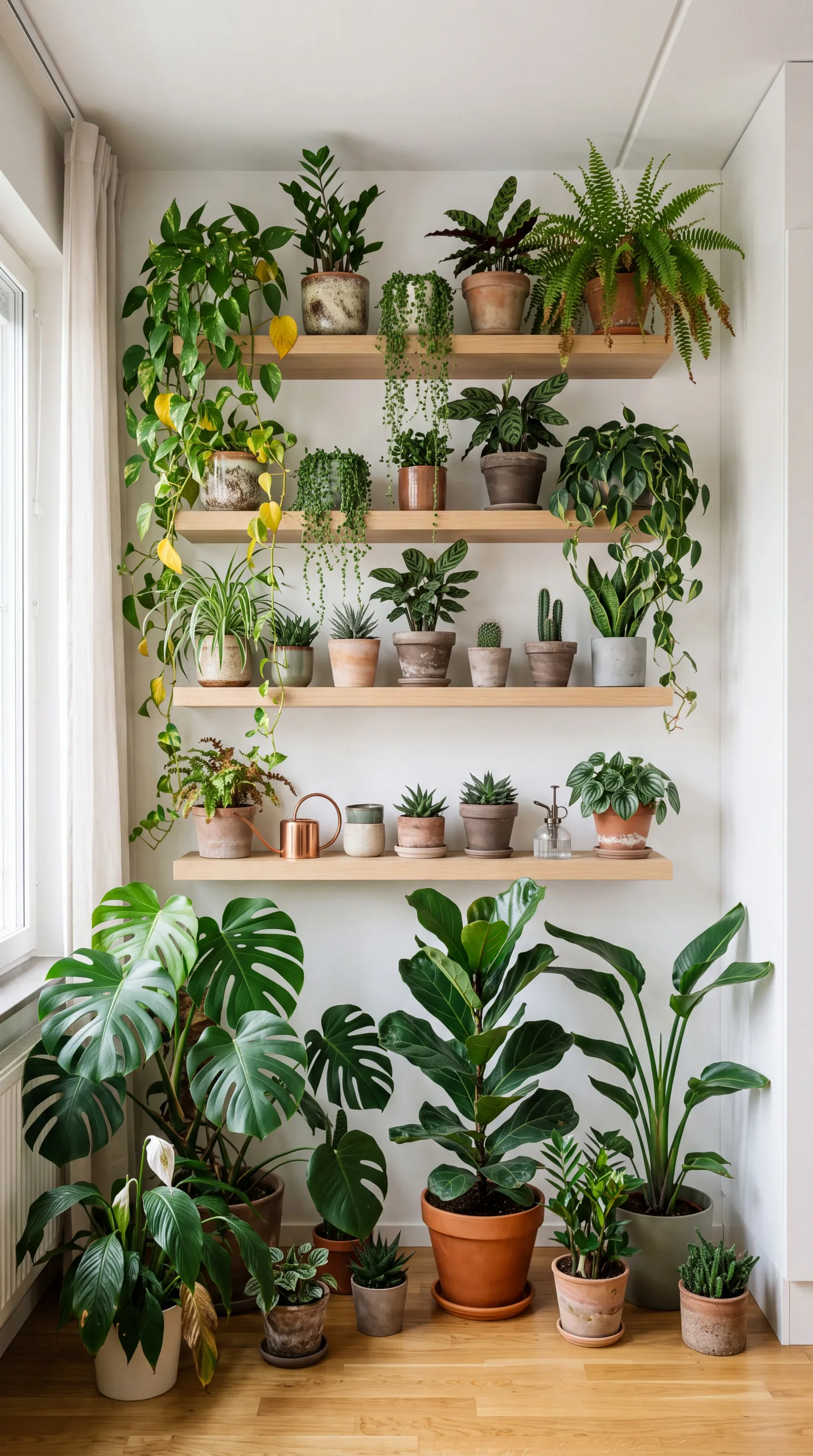
Do not automatically keep the summer routine. Review moisture and location before increasing water or feed.
Recheck the window conditions
Look at the daylight reaching the plant now. Watch for cold draughts while airing the room and proximity to cold glass. A nearby heater is another change to record. The same location does not mean the same conditions throughout the year.
Let condition guide watering
Many houseplants grow more slowly in low-light months, so an unchanged watering schedule may no longer fit. Check below the surface and remove standing water. Drooping leaves in wet soil call for a closer look rather than immediate watering.
Review active tasks
Go through care tasks and separate “check” from “water”. Consider whether suggested actions still suit the plant. Fertiliser is not a general fix for winter leaf loss either. Follow the species’ needs, actual growth and product instructions.
Keep changes easy to compare
Take a starting photo and record light, moisture and recent care. Note which damage was already present. If the plant deteriorates quickly or tissue becomes soft, seek horticultural advice rather than trying several treatments together.
Record heating as a changed condition
Note when a nearby heater starts running and whether ventilation changes the plant’s position. The same window can bring lower light, warm dry air and cold draughts in winter. Check each factor separately. One universal winter water volume cannot solve that combination for every species. Assess moisture and choose a suitable location. Summer comparisons remain useful when you state the actual differences explicitly rather than assuming that an unchanged room name means unchanged growing conditions.
Adjust reminders as checking dates
If a pot dries more slowly, its old alert does not require watering. Use it to inspect and adapt tasks to observed needs. Peace lily and snake plant may need different decisions on the same day. Record still moist, not watered if appropriate. A check can be complete without unnecessary watering. The app reminds you; it does not automatically assess rootball moisture and choose the appropriate dose. Keep the decision attached to the plant’s actual condition.
Do not overlook animals as seasonal change
Brown edges and leaf drop can relate to conditions, but visible animals or cottony clusters need separate inspection. Check undersides and young shoots, particularly around new plants. Photograph findings before cleaning. A seasonal explanation does not rule out pests. The relevant pest guide complements location and watering questions. Rapid decline or soft tissue warrants expert advice rather than treating every fresh change as a normal winter rest. Look at the observation even when a familiar season seems to explain it.
Your quick check
- How has the light changed?
- Any draught, cold glass or nearby heating?
- How moist is the soil now?
- Which tasks still fit the current conditions?
Common questions about this topic
Do all plants need less water in winter?
No. Species, light, room temperature and mix matter. Check each pot individually.
Should I treat every yellow leaf with fertiliser?
No. Light, moisture and roots can also play a part. A leaf alone does not establish a nutrient deficiency.
Sources & further help
General editorial guidance. Species-specific care and expert inspection remain important for unclear damage.