
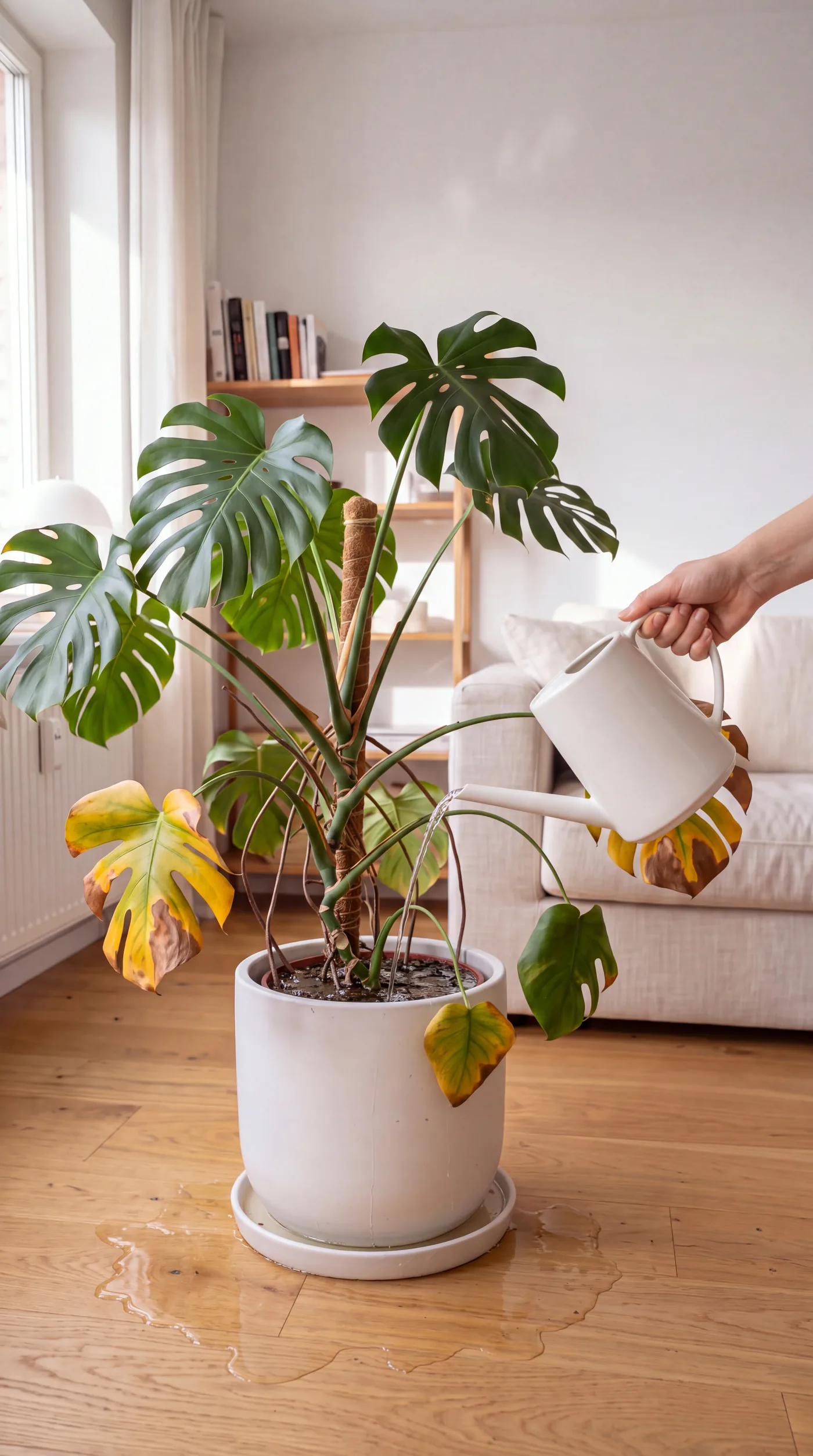
Check moisture and the plant’s needs first. After watering and draining, remove water left in the outer pot.
A dry surface is not the whole picture
Check carefully a little below the surface. For a manageable pot, comparing its weight before and after watering can also help. Appropriate dryness depends on the species; cacti and succulents need different conditions from many leafy houseplants.
Check where the water goes
Look for open drainage holes in the plant pot. Water according to the species and allow excess water to drain away. Empty the saucer or outer pot afterwards. Repeatedly adding water to already wet soil does not automatically solve drooping leaves.
Why a familiar routine can stop fitting
A new location, potting mix or container can change how quickly a pot dries. After repotting or moving, record a few observations: when you watered, how the soil felt beforehand and how long it stayed moist.
Make the reminder a check
Name your task “check moisture”. If the soil is still moist enough, you do not need to water just in case. The reminder has still done its job. Check plants in different locations individually.
Compare pot weight meaningfully
Weight is useful when you lift the same pot after appropriate watering and later before another check. A heavy container or decorative material can hide the difference. Do not compare different pots and infer identical moisture. Combine weight experience with careful inspection of the mix. Large containers need a safe alternative; do not lift them alone on suspicion. The value is a repeatable comparison rather than one universal number describing how much every wet pot should weigh.
Prepare clear care for an absence
For a holiday helper, explain which pot, what moisture to check and where surplus drains. Avoid simply saying water everything weekly. Show outer pots and differences between peace lily and snake plant. Clear names connect plants to notes. This preparation is your own agreement rather than a promised feature sharing a PlantDoctor collection with another account. Instructions should remain understandable without the app, particularly if someone else is deciding whether a plant actually needs water that day.
Review feeding when tips turn brown
Watering and dissolved fertiliser salts are connected. University of Maryland guidance describes salt accumulation as a possible contributor to damage. Record feeding product, use and visible crusts alongside watering history. A crust does not explain every brown edge. Check drainage and species guidance before using a large flushing volume. With already saturated mix, another blanket soaking is not equivalent to normal watering by need. The first decision should identify the problem being addressed rather than merely repeat the last action.
Your quick check
- What moisture level suits this species?
- Is the soil still moist below the surface?
- Can excess water drain away?
- Is any water left in the outer pot?
Common questions about this topic
Should I give a small amount every day?
A fixed daily amount will not suit every plant. Its needs and potting mix matter more than an unchanging schedule.
Do drooping leaves always mean thirst?
No. Root problems can also cause wilting. Check moisture and the overall condition first.
Sources & further help
General editorial guidance. Species-specific care and expert inspection remain important for unclear damage.