
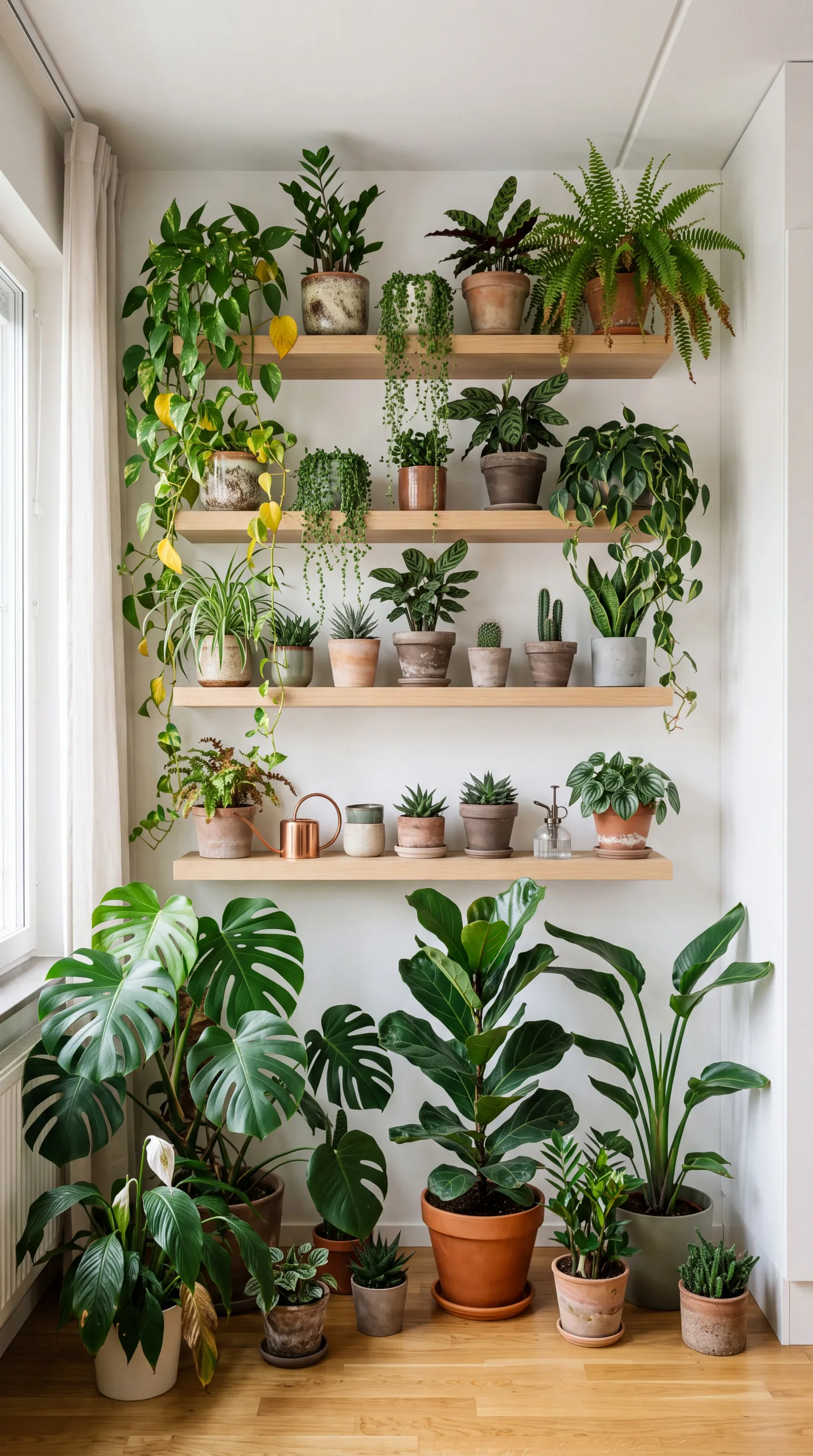
Consider the window, distance and direct sun together. Record a move and watch for new damage afterwards.
Observe the actual position
Look in the morning, around midday and later in the day. When does direct sun reach the leaves? Do curtains, buildings or trees block it? Available light decreases farther from a window. A light-coloured wall does not replace a suitable position.
Match the needs of the species
Use the label or a reliable species guide to check light requirements. “Bright” and “direct sun” are not interchangeable. Longer shoots growing towards light are a reason to review the location; they do not prove one cause on their own.
Make a gradual, considered change
Avoid shuffling the plant between several places every day. Record its starting position and choose an adjustment you can explain. Introduce stronger light gradually. Afterwards, look at new leaves and new damage rather than only old spots.
Revisit the spot in winter
The sun’s position and day length change. A suitable summer location can be very different in winter. Also note cold glass, draughts and heaters. This helps distinguish a location issue from a watering question.
Keep a small light record
Record three observations across the day at the actual position: direct sun, shading and noticeable warmth or draughts. A new curtain or leafy tree can change conditions. Note distance from the window without pretending to measure precise light. Such a record explains a move better than one brightly exposed image. It supports an expert question and later assessment of new damage, particularly when the plant’s exposure differs considerably between morning and afternoon.
Replace room names with location details
South window does not show whether a leaf sits against glass or behind shading farther inside. Describe the position so another person can imagine it. Also check whether the window opens and exposes the plant to cold air. Light and temperature are different observations at the same place. A location can be bright but inappropriately cold. Increasing water does not resolve that combination and may introduce another problem while the position remains unsuitable.
Use the scorch route for fresh patches
If stronger sun is followed by pale or dry areas, compare window-facing and rear surfaces. Ask whether the distribution fits the new exposure. The sun-scorch guide develops that comparison. Extra water is not a general answer to brighter surroundings. Monitor moisture and make a reasoned light adjustment. Complete darkness is not species-specific care either; the new position must still meet requirements. Record the actual change so later observations refer to conditions rather than an uncertain memory.
Your quick check
- When does direct sun reach the leaves?
- What shades this position?
- Does it fit the species’ light needs?
- What changed after the last move?
Common questions about this topic
Can PlantDoctor measure light at my plant?
Photo analysis provides guidance. This website does not promise a measurement of light received throughout the day.
Should an unwell plant always go next to a window?
No. Consider the species’ needs, draughts and strong sunlight first.
Sources & further help
General editorial guidance. Species-specific care and expert inspection remain important for unclear damage.