
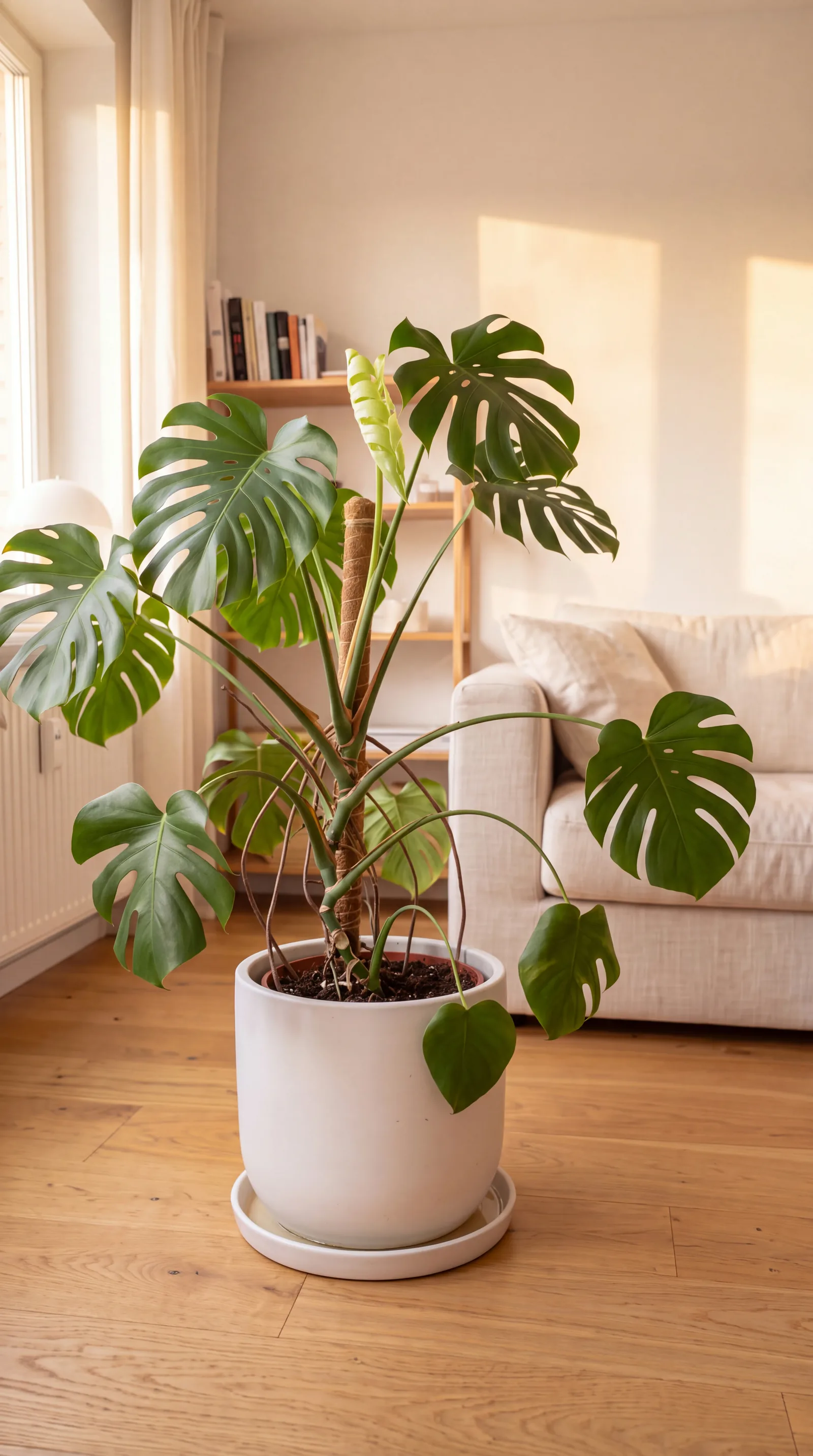
Repot for a reason, such as a crowded root ball or unsuitable mix. The new container must suit the plant.
Gather clues before repotting
Roots through drainage holes, a tightly filled root ball or unusually fast drying can prompt a check. Record these clues together. One yellow leaf alone does not answer the repotting question.
Choose suitable mix and drainage
Use a potting medium suited to the species. Orchids, cacti and many leafy plants need different mixtures. Choose a draining container and an appropriate increase for a healthy, crowded root ball. A large volume of extra soil can remain moist for longer.
Prepare and handle carefully
Have suitable mix, a clean container and a work surface ready. Release the plant gently without pulling on its leaves. Look at the roots before replacing it. Soft, collapsing roots need their cause investigated; random cutting is not a substitute for assessment.
Record the new starting point
Write down the date, pot size and mix used. Take a comparison photo afterwards. Reassess moisture instead of automatically continuing the previous routine. Also check whether the new mix already contains fertiliser.
Plan before removing the rootball
Prepare suitable mix, an appropriately sized pot with drainage and a clean surface. Compare sizes before exposing roots. A large spare container adds mix and changes drying. Match the choice to the species and healthy ball. Photograph the starting condition if a problem prompted the change. Later you can distinguish crowding, unsuitable mix and actual tissue damage instead of describing all three simply as a plant that needed repotting or assuming a larger pot solved them alike.
Do not assume the old watering rhythm
After changing mix or container, moisture behaviour may differ. Your existing reminder remains a checking time rather than automatic watering. Inspect drainage and standing water after an appropriate application. Record initial observations in the new conditions. One unchanged leaf does not prove the replacement pot is unsuitable. Further damage, rootball moisture and new leaves provide better comparisons than a fixed success deadline. Keep the care change specific enough that a later adviser can understand what actually happened.
Treat rotting tissue as a separate problem
A healthy crowded ball and dark disintegrating roots need different decisions. The root-rot guide covers inspection and the limits of a universal rescue. Avoid cutting healthy roots or stripping all mix away merely for a cleaner view. A soft base or collapsing ball needs expert assessment of extent and suitable materials. A routine size change cannot guarantee that a severely damaged plant will regain enough water uptake, even when the replacement pot is attractive and drains correctly.
Your quick check
- What specific reason supports repotting?
- Does the mix suit this species?
- Are drainage holes open?
- Have you recorded the date and new container?
Common questions about this topic
Must every plant be repotted every year?
No. Check its actual needs. A date on the calendar is not enough reason on its own.
Can I use any soil?
No. Consider the species and the properties of the mix; a general-purpose label is not a guarantee.
Sources & further help
General editorial guidance. Species-specific care and expert inspection remain important for unclear damage.