
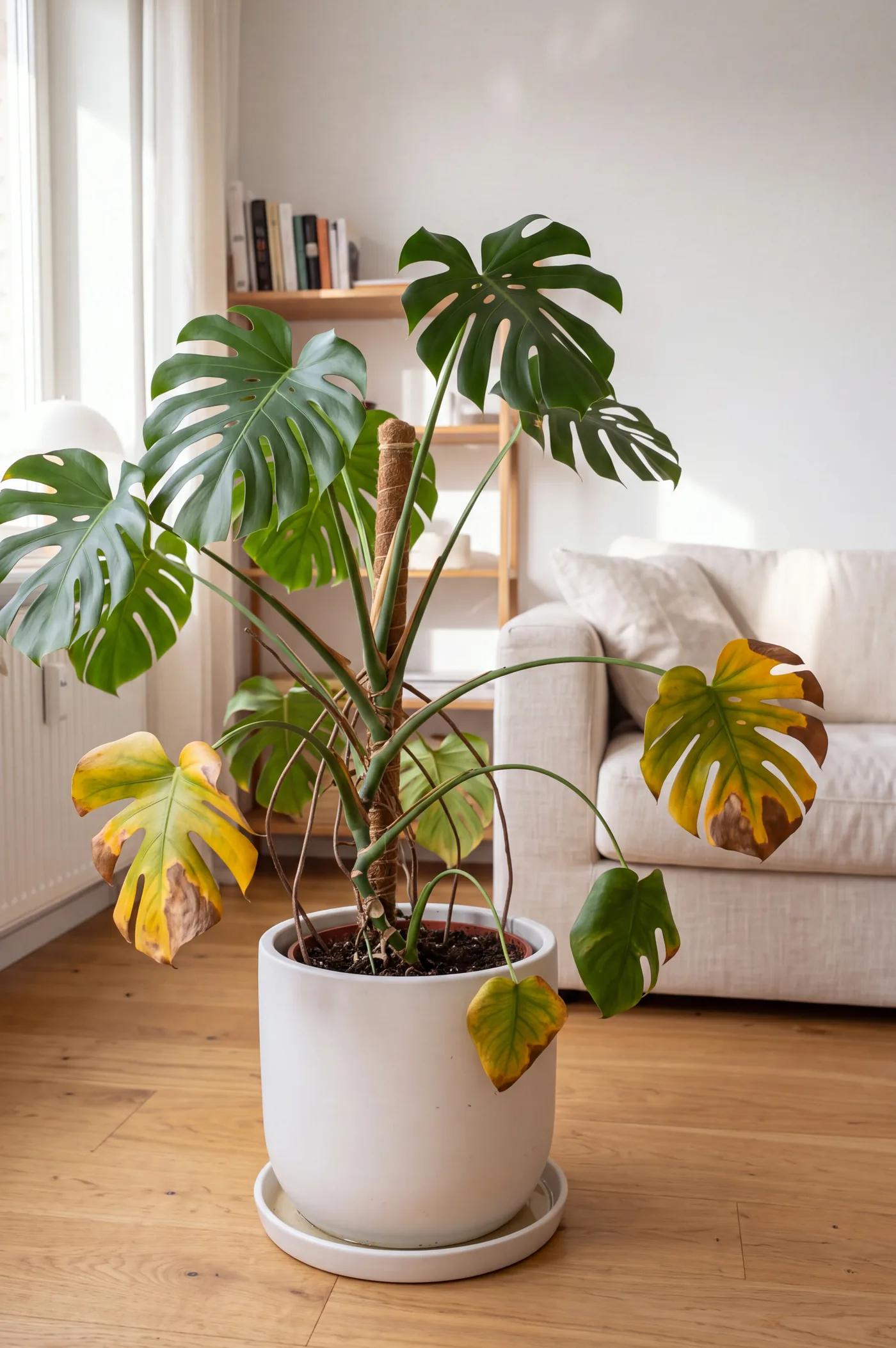
Wilting can happen in wet soil too. Check the pot and recent changes first.
Describe what is drooping
Is it a few leaves or the entire plant? Are stalks soft, leaves rolled or branches bent? Photograph the whole plant and one affected area. Note whether it happened suddenly or developed gradually.
Check moisture and drainage together
Feel carefully below the soil surface and look inside the outer pot. Both dryness and damaged roots can cause wilting. If the mix is already wet, adding water is not a sensible automatic response.
Reconstruct recent changes
Was there a hot sunny day, a move, repotting or a cold draught? Include the last watering date. The order of events helps you compare a photo assessment with the actual situation.
Choose a focused follow-up
Seek horticultural advice for rapidly progressing wilting, soft stems or rotting areas. If the situation is unclear, document the pot and any visible roots without repeatedly disturbing the plant. A next step should follow a finding.
Follow different dry and wet paths
A very light dry ball leads to water-uptake assessment. A heavy wet one leads first to outer pot, drainage and possibly roots. Leaves may hang similarly in both cases. Record the combination rather than calling it thirst as a completed diagnosis. The drought and overwatering guides develop different follow-up questions. If moisture has not been checked, that uncertainty is the immediate next task rather than a reason to add water as a precaution.
Record time of day for comparison
One warm-afternoon view does not establish a lasting change in leaf position. Compare later while still checking the mix and recording location. This does not mean every plant can be ignored until evening. Collapse, a soft base and spreading damage need attention regardless of the daily pattern. The comparison supplies context rather than guaranteed spontaneous recovery. Use the same view so a different camera angle is not mistaken for leaves standing more firmly or a successful watering result.
Include species in the moisture check
Peace lily and snake plant illustrate different needs. A peace lily can wilt conspicuously when dry; a snake plant stores water and needs more restrained decisions. Both species guides support the first check. A name does not rule out root damage or pests. When appearance and moisture do not fit together, investigate further or seek advice. Repeated extra watering cannot replace that clarification and may obscure the starting condition you needed to understand.
Your quick check
- One leaf or the whole plant?
- Is the soil dry, moist or wet?
- Any water in the outer pot?
- What happened just before the change?
Common questions about this topic
Must the plant straighten up immediately?
There is no reliable time for every species and cause. Watch the overall change and any new damage.
Should I scan several times in a row?
Gather better observations first. Repeated similar pictures do not replace checking mix, location and roots.
Sources & further help
General editorial guidance. Species-specific care and expert inspection remain important for unclear damage.