Check texture and position: across the leaf, in leaf joints or only where droplets have dried.
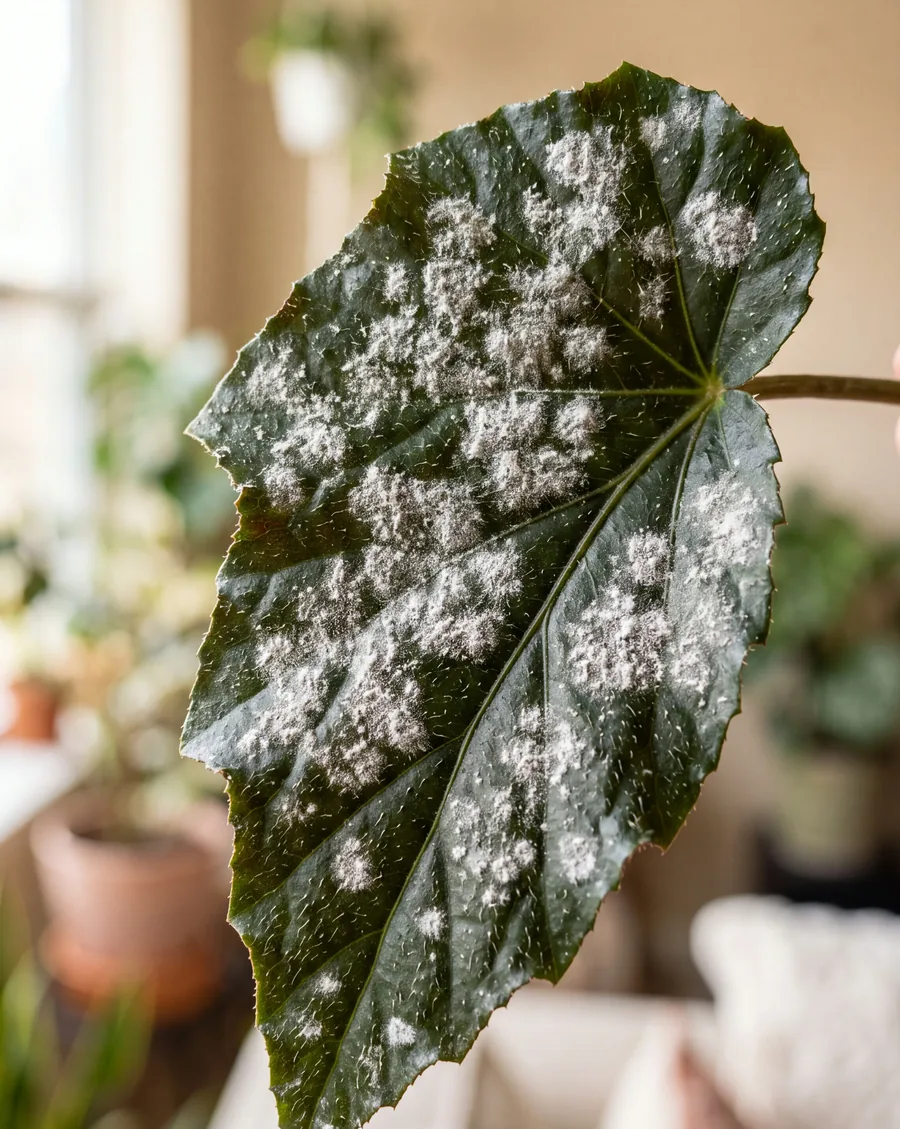
Examine a powdery layer
Powdery mildew can form white, powder-like fungal growth on leaves. Depending on the plant, shoots or flowers may also be affected. Take a clear photo of the texture before removing it.
Distinguish cotton-like clusters
Mealybugs can leave white, waxy, fluffy-looking material, particularly in leaf axils and sheltered areas. Inspect the joints between leaves and stems as well as the upper leaf surface.
Not every pale mark is an infestation
Record whether the marks appeared after misting or watering. A white residue may need a different interpretation from a spreading coating. Further observations matter; colour alone cannot establish a diagnosis.
Record the signs before changing them
Take a close-up and a photo of the whole plant. If you find insects or suspicious clusters, temporarily separate the plant. Ask a horticultural adviser about uncertain signs before choosing a treatment.
Describe location with texture
White material on mix differs from cotton at a joint or powder over a leaf. Record place and shape before removing it. A swipe may destroy useful texture. Ask whether it spreads or remains unchanged since watering. Description is a sensible next step even when identification stays open. White alone leaves too many possibilities and does not justify the same blanket treatment for every surface or species. Keep a wider view to show where the material occurs.
Use extra signs for the mealybug route
For separate cottony clusters, inspect sheltered areas and look for recognisable animals. Stickiness adds context rather than identity alone. The mealybug guide develops inspection and follow-up. An even thin coating without animals does not automatically fit. Avoid arbitrary alcohol or oil on sensitive foliage merely because it is white. Tolerance and suitable use depend on confirmed cause. An unclear animal image needs a better view or expert help rather than continually adding mixtures.
Do not treat cleaning as confirmed resolution
Wiping changes the starting surface. Record removal and reappearance. A cleaner photograph does not prove a fungus or hidden animal is gone. Check fresh areas and neighbours consistently. Unclear texture or rapid increase benefits from more views and advice. Analysis lists possibilities; the first named cause does not oblige treatment. Keep material, location and actual development as the basis of the next decision rather than assuming disappearance from one edited surface demonstrates complete recovery.
Make a comparison photograph in consistent light
You notice pale dots after misting, but in the next photograph they look like a broader coating. First check whether reflections or a different distance changed the appearance. Photograph a recognisable leaf again under even light and inspect its texture directly. Cottony clusters at joints, identifiable animals and a thin broad layer are different findings. Record new locations separately from known ones. If you wiped an area, include that intervention in the timeline. You can then distinguish something actually developing from a photograph that merely presents the same surface differently, which matters before choosing a treatment.
Your quick plant check
- A powdery layer or cotton-like clusters?
- On the leaf or in sheltered leaf joints?
- New patches or unchanged residue?
What to avoid
Avoid blanket spraying or mixing home remedies. A suitable response depends on whether the cause is a fungus, an insect or a deposit.
How PlantDoctor can help
Use a sharp photo of the affected area for PlantDoctor. The result and symptom library help you compare observations but do not replace a confirmed identification.
Explore plant diagnosisSources & further reading
This guide provides general orientation. The following specialist sources offer further detail.