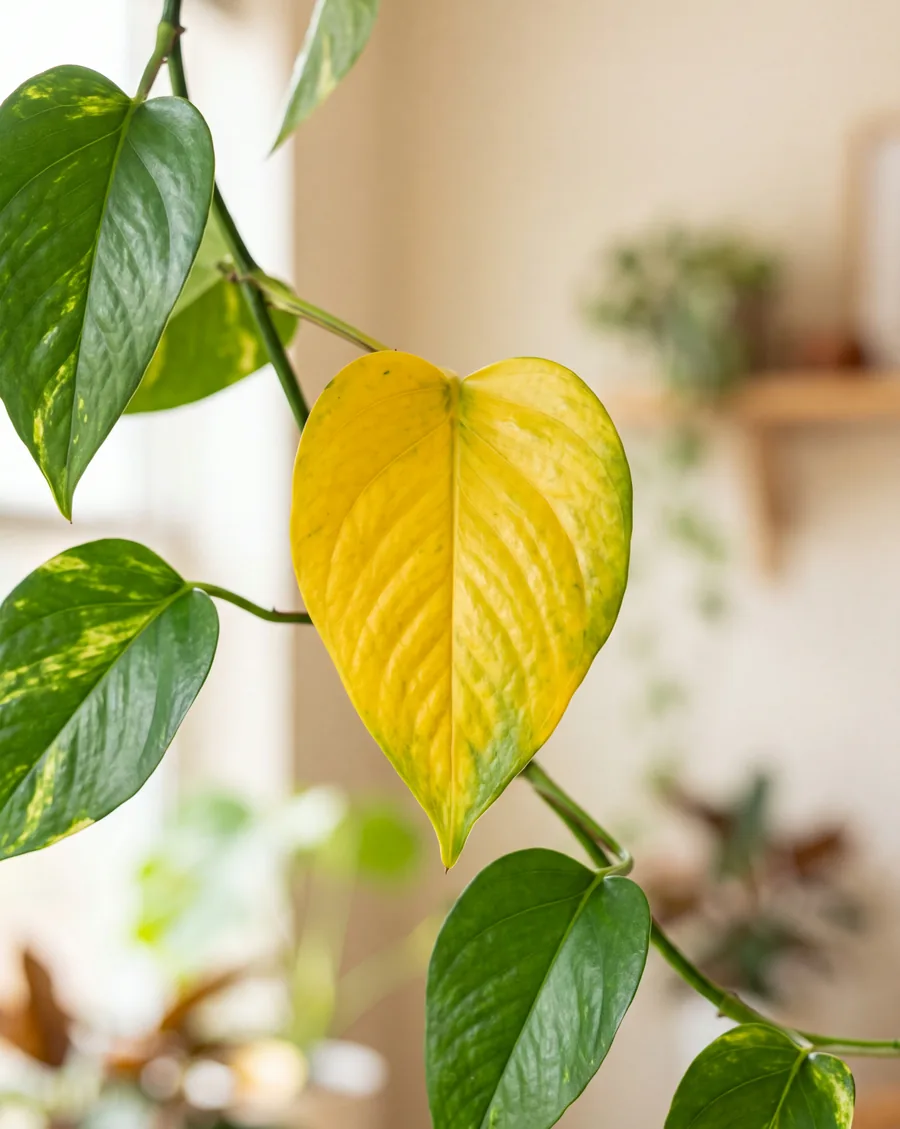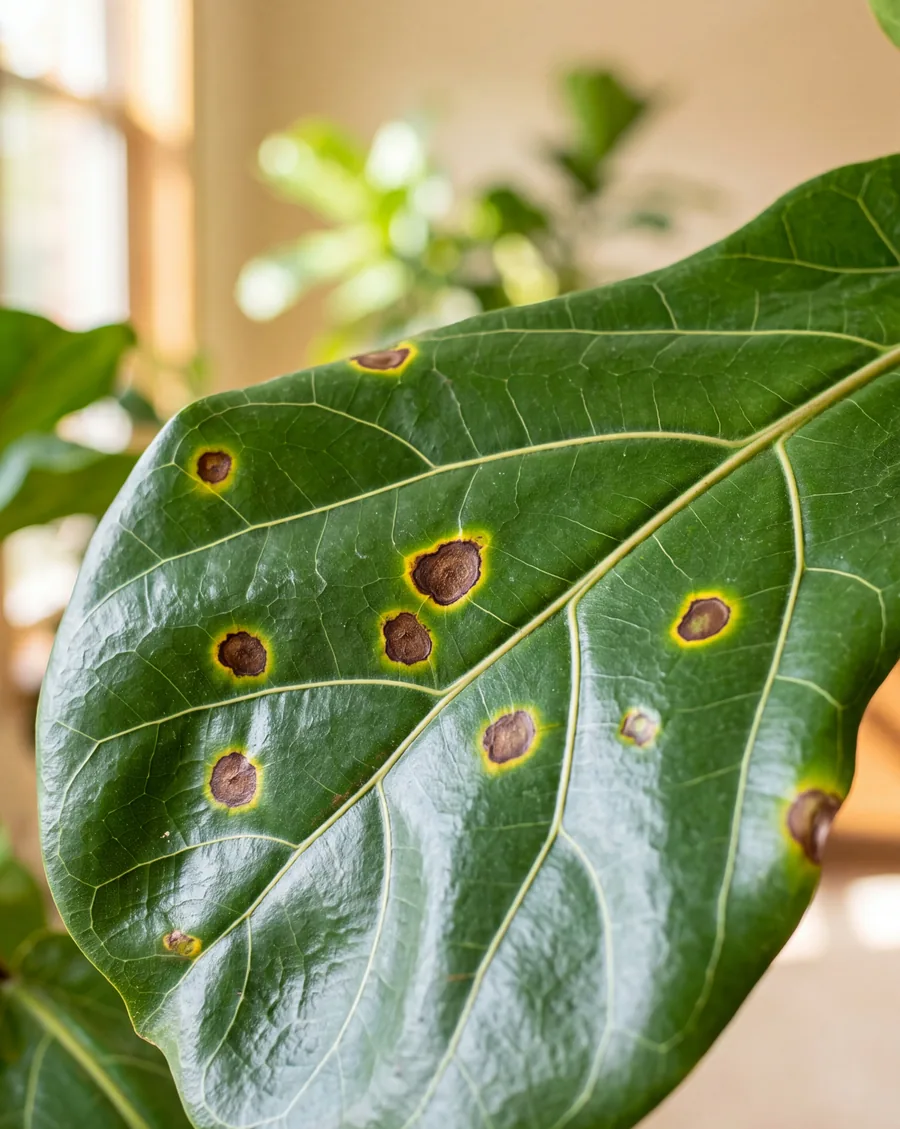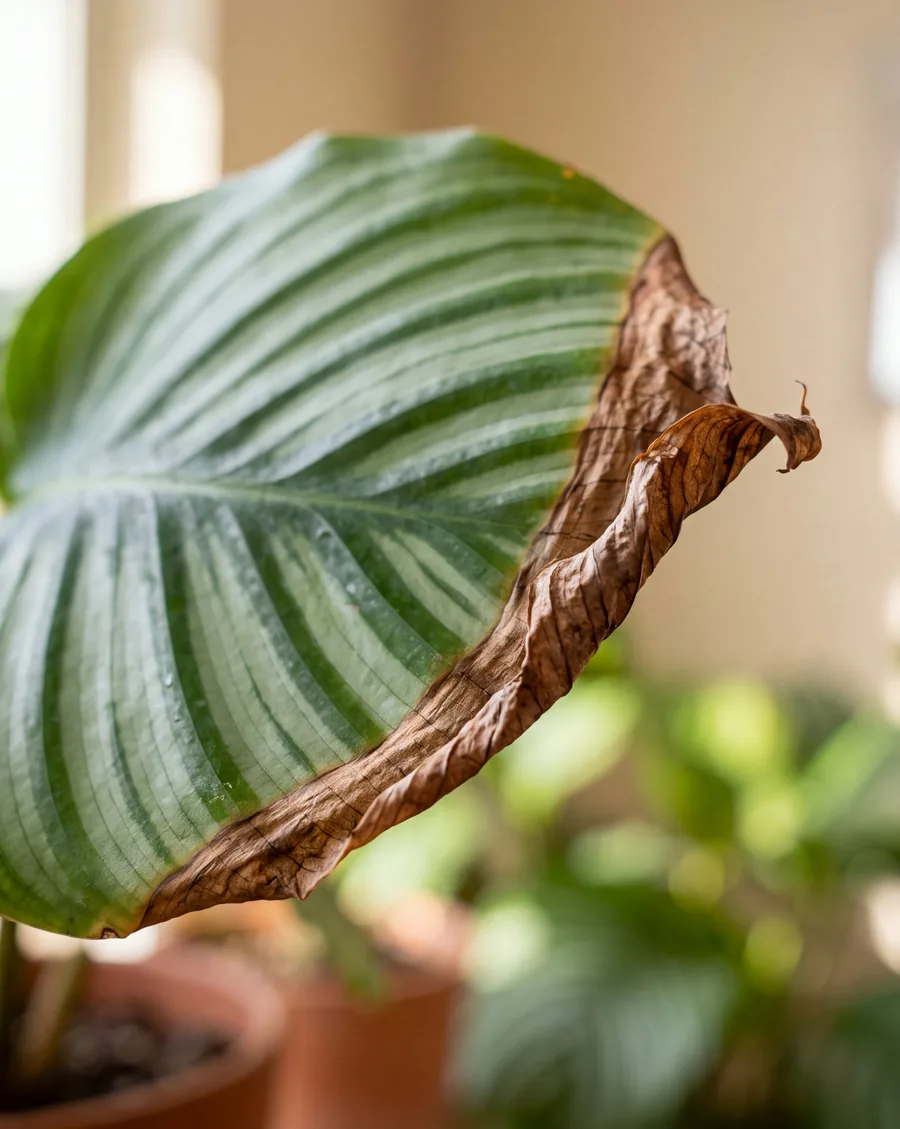
Judge new damage and fresh growth. Dead leaf tissue will not turn green again.
Separate tips from larger patches
Photograph the entire leaf. Is only the very tip brown, is there a dry margin all around, or is the damage in the middle? These differences are more useful than colour alone.
Review watering and feeding together
Dry or very wet soil, excess fertiliser and salt buildup can contribute to brown margins. Note when you last fed the plant and which product you used. Extra fertiliser is not a general fix for brown tips.
Include the location
Dry air, draughts and strong sun may also play a part. Check whether affected leaves are close to a heater, cold glass or recently increased sunlight. Consider the needs of the particular plant species.
Make changes easy to follow
Choose a clearly visible leaf for comparison and photograph it again when something changes. Record any care adjustment alongside it. This helps you see what changed and whether new damage appears.
Separate existing edges from fresh damage
Choose a leaf and record its already brown area. Check later for extension or fresh affected leaves. An old dry tip often stays visible, so success cannot depend on it becoming green. If trimming, photograph first and record removal. Otherwise the next view improves only because the comparison area was cut away. Appearance changed by your intervention differs from a change in growing conditions. Keep that distinction clear when judging whether the care adjustment helped.
Describe water and feeding specifically
Record watering, actual moisture, product and feeding use. Increasing water and feed together does not explain brown edges. Check crusts and drainage. Wet mix raises overwatering rather than automatic flushing; dryness leads to uptake. Appropriate instructions and species care support further action. A household mixture does not explain the finding. Address a supported observation rather than colour alone, and keep the original condition available for later comparison if the next leaf develops a similar mark.
Inspect air and light separately
Heating and new direct sun are different conditions. Review distribution and location at several times. A dry edge alone cannot identify the relevant factor. Bright living room is too broad; note heater, distance and changes. Adjust for a reason and watch fresh growth. Animals, soft tissue and larger new areas need another route. Include the whole plant rather than repeatedly checking one trimmed end and assuming that its unchanged colour proves a new action failed.
An old edge and a new position
A plant recently moved directly beside a window. Brown areas appear first on the facing side, while other leaves remain unchanged. Compare the sun’s path, distance from glass and moisture instead of trimming the tip every day. A justified location adjustment does not turn existing dead tissue green again. Assess subsequent leaves and newly damaged areas instead. If several plants develop edges after the same feeding event, record that shared change for advice. The pattern across locations and time determines which question to explore, rather than treating every brown edge as identical evidence of thirst.
Your quick plant check
- Only the tip or a larger area?
- When and how was the plant last fed?
- Any nearby heater, draught or direct sun?
What to avoid
Do not heavily trim leaves just to make the photo look better. Keep the affected area visible for assessment and seek advice if damage continues to spread.
How PlantDoctor can help
Use PlantDoctor to photograph the affected area and read suggested care steps. Adding relevant tasks helps you keep up with the follow-up care.
Explore plant diagnosisSources & further reading
This guide provides general orientation. The following specialist sources offer further detail.