
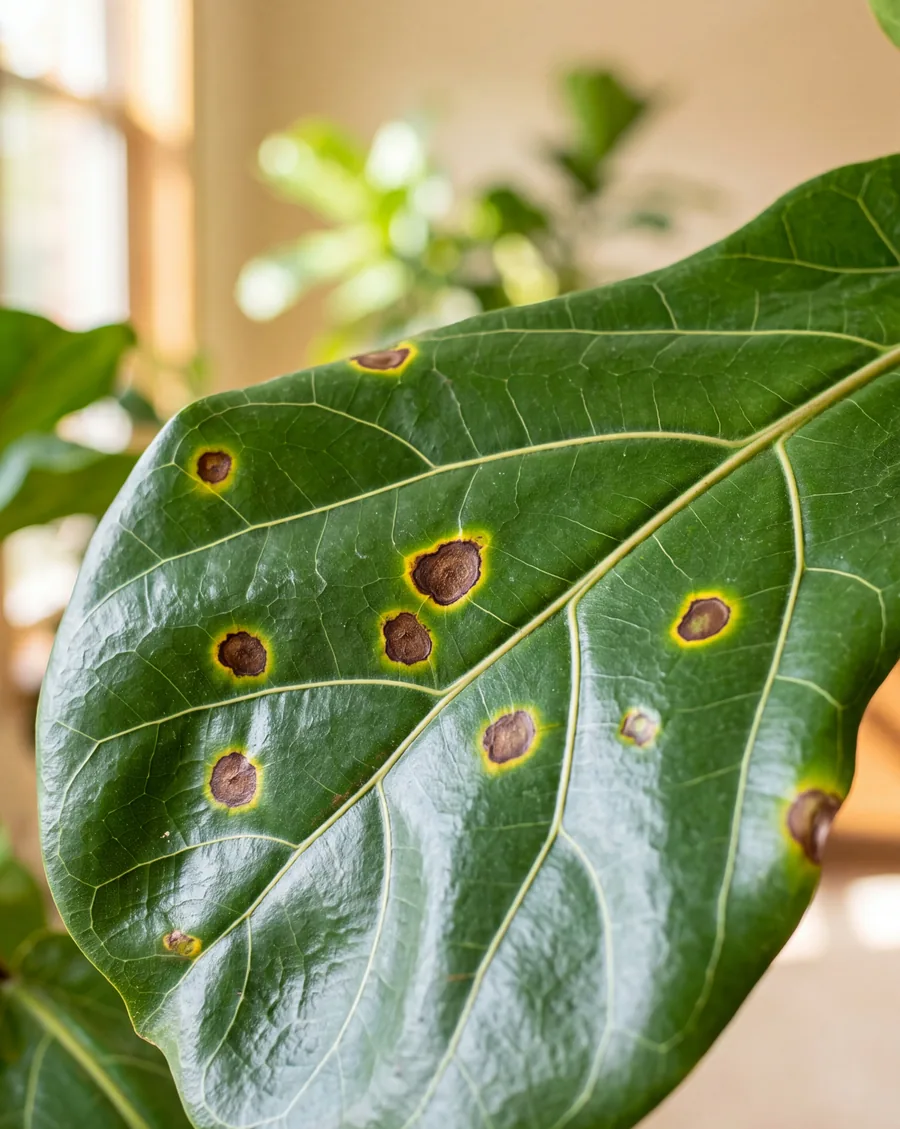
If there is a reasonable suspicion of pests, separate the plant and record the findings before choosing a treatment.
Use a consistent order
Look at the whole plant first, then young shoots, leaf undersides and leaf joints. Finish with the pot edge and mix. Move leaves gently in good light. A clear order keeps the inspection manageable and helps cover sheltered places.
Photograph insects and damage separately
Take one picture of the damaged surface and a separate sharp image of any unusual structure. Describe size, position and movement. Discolouration alone does not establish an infestation; a blurred pale dot is not a reliable identification either.
Include neighbouring plants
If pests are reasonably suspected, separate the plant for now. Check those that stood nearby for similar findings. Wash your hands after handling an infested plant and keep tools clean.
Identify before treating
Do not select a product solely from an app assessment. Ask a horticultural adviser to identify an unclear finding. Any pesticide must be authorised and suitable for the species, location and intended use, with its instructions followed. This guide does not offer general mixing recipes.
Photograph animals and damage separately
The whole plant shows extent; a close-up shows animal features. These answer different questions. Support the leaf gently and use steady light. A blurred black dot does not reliably establish thrips. Fine threads, cotton in leaf joints and flies near mix lead to different guides. Record location. This prevents a guess from one leaf image from overriding later visible features of an animal you actually find while inspecting another part of the plant.
Describe extent for each plant
Inspect neighbours individually and note live animals or fresh marks. Proximity alone does not confirm infestation. Distance can help when suspicion is reasonable and the new position suits the species. A dark cold storage area is not a universal answer. Avoid one unclean cloth across the collection. A specific finding for each pot is easier to assess than treating every plant before any animal has been identified or the apparent extent has been observed.
Separate monitoring from product choice
Cleaning can improve visibility but does not establish that every hidden stage is gone. Record method, date and follow-up instructions for a suitable product. Avoid mixing applications on suspicion. Pest identity, sensitivity and setting determine suitability. Detailed spider-mite, thrips, mealybug and fungus-gnat routes offer comparison questions. For uncertain identity or increasing damage, expert help is a sensible next step rather than simply repeating the previous application more often and assuming that frequency resolves uncertainty.
Your quick check
- Have you checked undersides and shoots?
- Are insects or structures photographed clearly?
- Have neighbouring plants been checked?
- Have you narrowed down the suspected pest before treatment?
Common questions about this topic
Does a silvery spot confirm pests?
No. Pattern, undersides and other findings are needed to narrow down the suspicion.
Can every pest be identified from a photo?
No. Small insects and hidden damage can be missed. An expert inspection may be necessary.
Sources & further help
General editorial guidance. Species-specific care and expert inspection remain important for unclear damage.