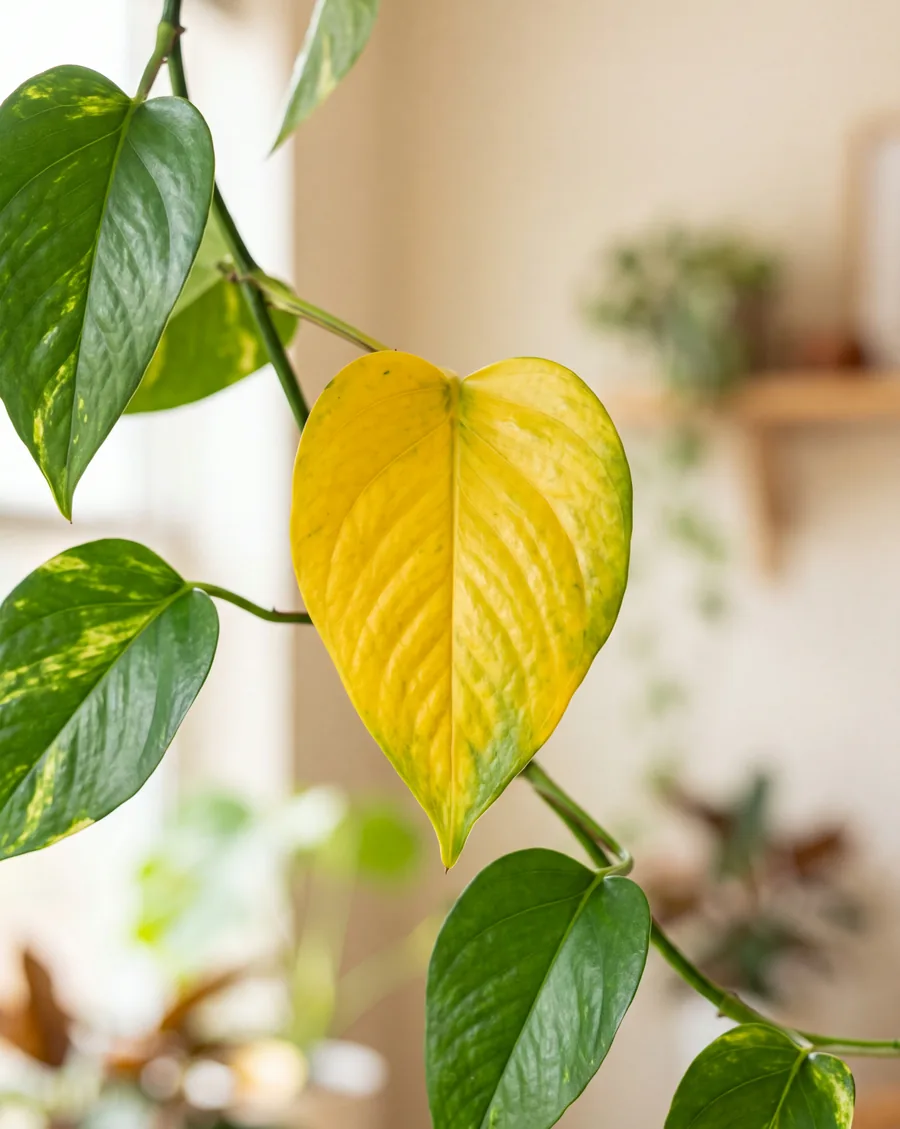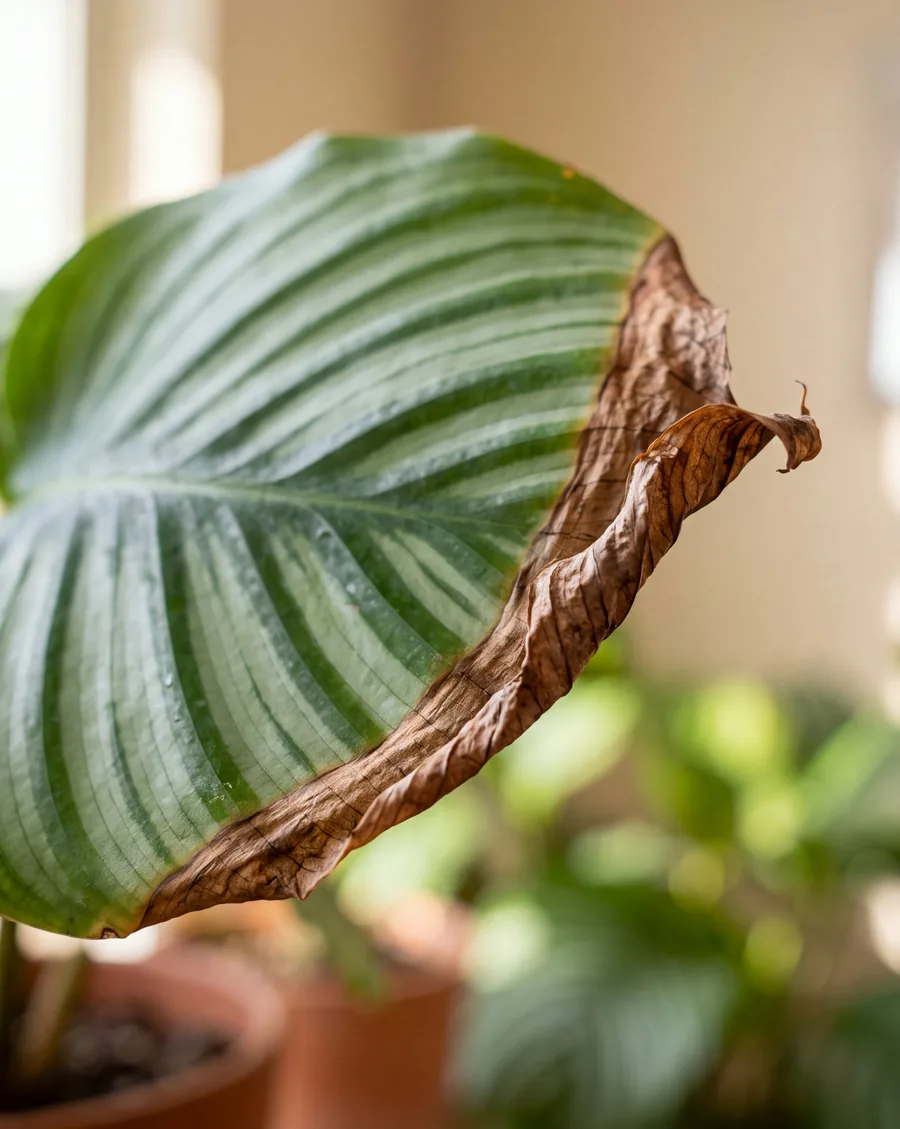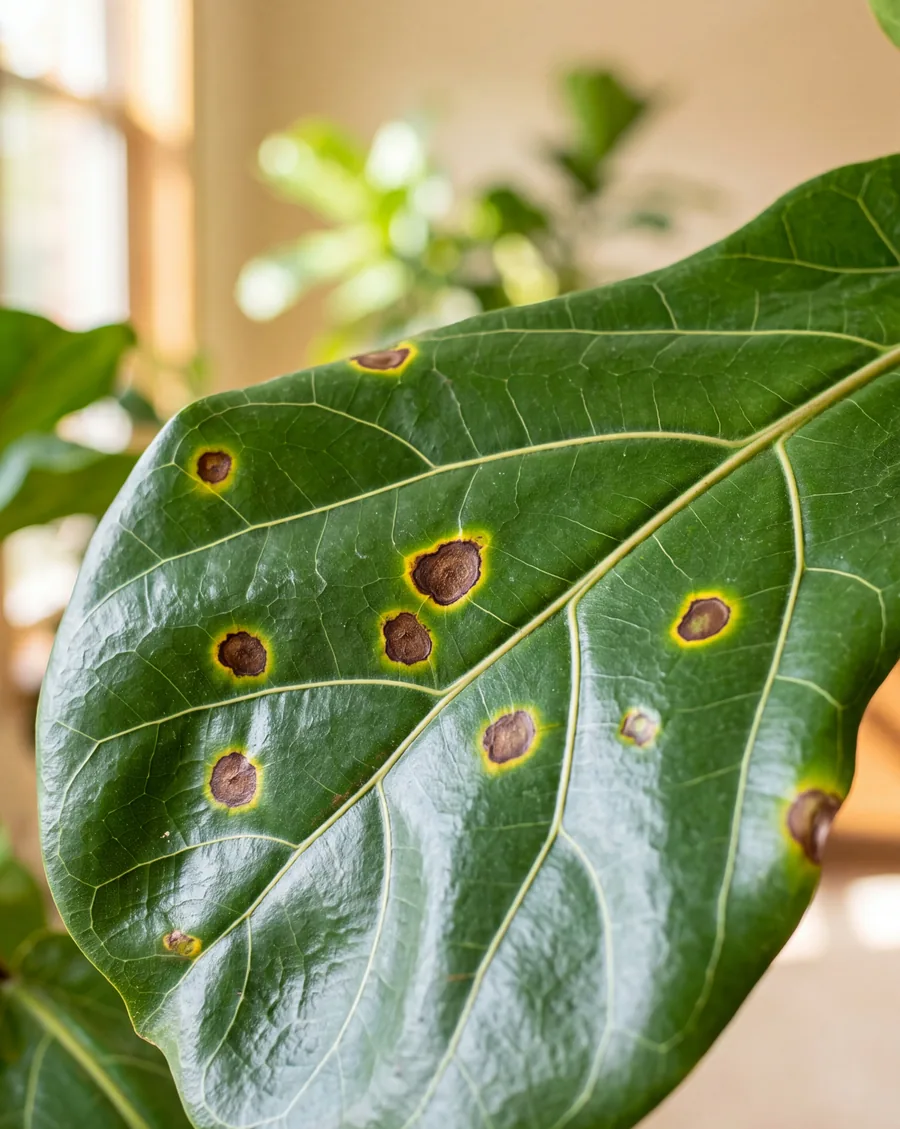
Photograph both sides. A spot on one leaf is only part of the picture.
Record colour and distribution
Are the areas dry or soft, round or irregular? Is one leaf affected, or several plants? Take an overview and a close-up without backlighting. Note whether spots have recently grown or become more numerous.
Inspect undersides and shoots
Look for small insects, webbing or unusual deposits. Some sap-feeding insects, including thrips, can cause silvery discolouration. A silvery patch alone does not confirm an infestation.
Consider location and wet leaves
Think about recent moves, intense sun and water on sensitive foliage. Different care problems and pathogens can look similar. A photo offers clues but cannot reliably distinguish every possible cause.
Choose the next step deliberately
If there is a reasonable suspicion of pests, separate the plant while investigating. Photograph visible insects instead of immediately applying several products. Rapidly spreading spots or several affected plants are reasons to contact a horticultural adviser.
Keep the pattern comparable
Photograph the whole leaf and recognisable marks in soft light. Note dry or soft tissue and the affected surface. A similar crop later helps separate change from lighting. A closer image makes an unchanged spot look larger. Add newly affected leaf count rather than comparing image size alone. Distribution across the plant helps more than an isolated colour. Keep an overview if later removing or cleaning an area so the initial pattern remains available.
Inspect silvering and animals separately
Silvering can prompt thrips assessment; fine pale speckles may prompt mite assessment. Neither confirms an animal alone. Check undersides, joints and young shoots in good light. A clear animal view is separate information. Keep marks and animals distinct so an adviser can compare causes. Document before cleaning. Product choice just from silver or brown skips this check and may add stress before you understand the original finding well enough to choose suitable care.
Compare position and distribution
If new sun preceded the change, inspect facing and rear sides. A fitting pattern leads to scorch assessment. Damage on both sides or soft tissue leaves other causes open. Note care changes and multiple views. PlantDoctor suggestions should fit actual findings. Rapid spread or several plants benefits from expert help rather than a new product after each guess. Observation order matters more than growing confidence without further evidence or a more frequently repeated treatment.
Distinguish two superficially similar pale areas
One plant has silvery areas and small animals on young shoots. Photograph both and explore the thrips route. On another, a larger pale patch appeared after a move into direct sun; your inspection has not found animals so far. Comparing exposure is a sensible first route without excluding other causes. Record whether both surfaces or only exposed areas are affected. One photograph under different lighting can make these histories look similar. A whole-plant view, close detail and the timeline make the distinction understandable for the next check instead of relying on colour or a guessed label alone.
Your quick plant check
- Are spots growing or increasing in number?
- Can you see insects or webbing?
- Is one plant or more than one affected?
What to avoid
Do not select a pesticide based only on a spot’s colour. Narrow down the cause first and have it confirmed by an expert when needed.
How PlantDoctor can help
The three PlantDoctor views provide context: overall condition, leaves and stem, and the problem area. Read the suggested causes and compare them with what is actually changing.
Explore plant diagnosisSources & further reading
This guide provides general orientation. The following specialist sources offer further detail.